Preface
In 2016, countries around the world signed the Paris Agreement, setting a
common target for addressing climate change, which limits global temperature
rise to 2°C, or even 1.5°C, above the pre-industrial level. Since then, achieving
carbon neutrality around 2050~2070 has gradually become a core policy goal for
most countries. Actions centered on this goal focused on decarbonizing the
energy system, especially through the development of non-fossil energy and the
transition away from fossil fuels. However, a decade later, the global energy
transition toward carbon neutrality is progressing much more slowly than
expected. Carbon emissions continue to grow, and the global energy structure
remains dominated by fossil fuels.
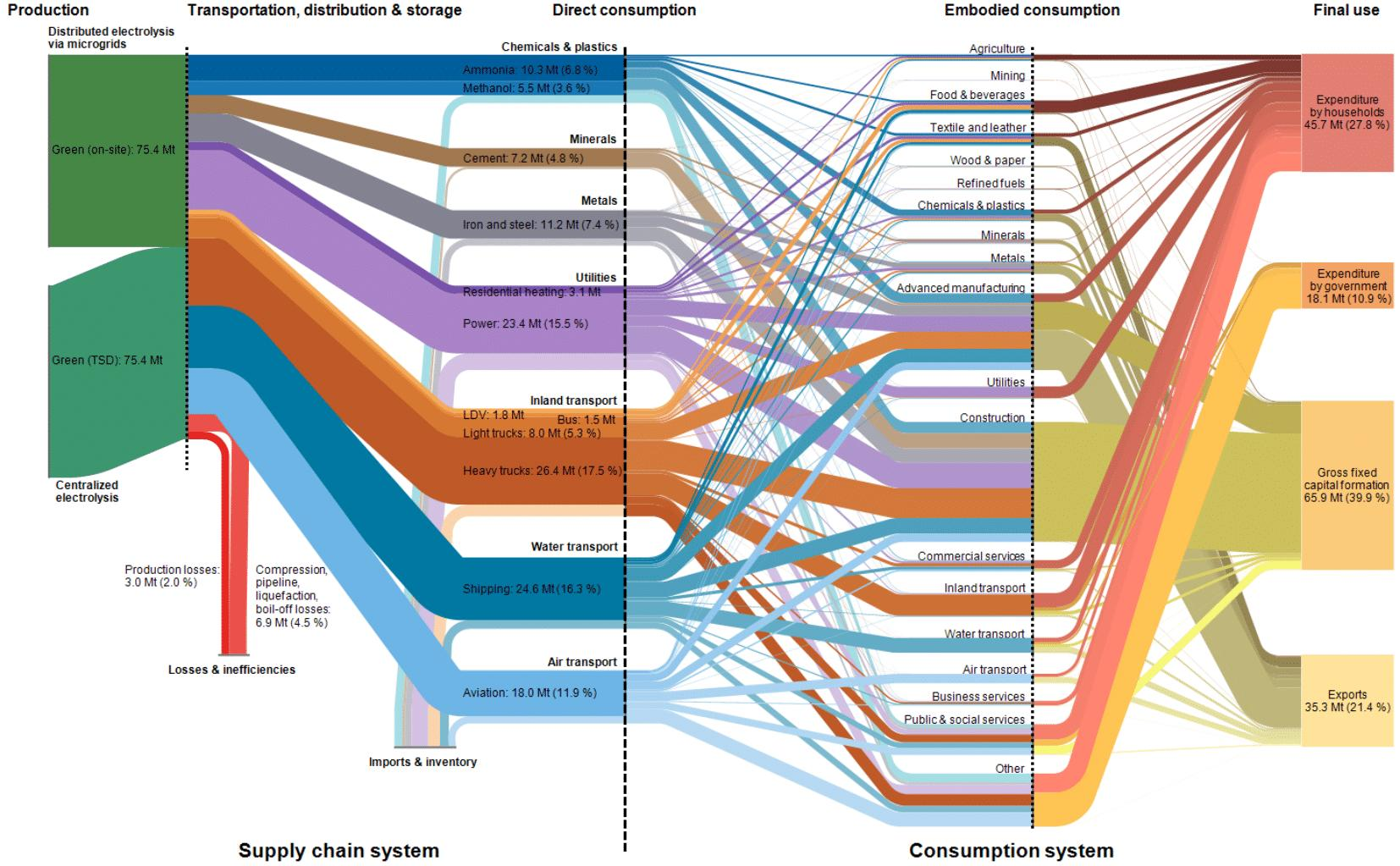
This phenomenon prompted the authors’reflections by critical thinking. Is the
problem only about phasing out fossil fuels? Apparently, this is only the surface
of the problem. Underlyingly, the deeper issue is that
economic growth
drives
massive
material use
, material production drives massive
energy use
, and this
energy use still heavily relies on fossil fuels. Therefore, if we do not reassess
climate change from the perspective of the
energy-material-economy
relationships, our climate policy goals and actions will remain limited. Yet this
interlaced nexus is still far from being understood, because of real-world
complexities and the barriers of international cooperated cross-disciplinary
research and practice.
With the shift of global industrialization centers in the beginning of this
century, China has increasingly become the focal point of global economic
growth, material use, and energy use. The contradictions of the energy-material-
economy relationships are prominently reflected in China, which has become the
world’s largest carbon emitter because of fossil fuel combustion. From the
beginning of this century, the authors had conducted systematic research on
China’s strategic energy issues, witnessing the evolution of China’s energy policy
agenda from energy security and environmental protection to climate change. As
our research deepened, the focus gradually shifted from energy alone to the
relationship between energy and economy. However, this relationship proved too
complex to explain by energy analysis alone.
The authors finally found that the key clue lies in material utilization,
including iron and steel as well as aluminium. Materials play a primary role in
transmitting economic growth into energy demand, because energy is mainly
used in material production and in the operation of the devices and facilities made
by materials. In particular, economic growth requires the accumulation of
materials in society, and this dynamic process shapes the interaction between
energy and the economy. In this way, the basic idea of the
Energy-Material-
Economy Nexus
was gradually formed through China’s case studies. As China’s
global influence has continued to grow, and as climate change is by nature a
global issue, the authors also began to re-examine these issues from a global
perspective. These experiences and reflections contributed to the writing of this
report. Starting from China’s experiences and research findings, this report
attempts to distill a theory for achieving global carbon neutrality from the
perspective of the energy-material-economy nexus, and thereby to make a
contribution to the sustainable development of humankind.
To help readers form a comprehensive understanding, this report does not
provide a technical introduction to the full derivation process through which
numerous China case studies were generalized into broader theory. Instead,
Chapter 1 introduces the theoretical framework
and its significance for the
global energy system transformation toward carbon neutrality, including the
definition of the energy-material-economy nexus, its dynamic characteristics,
control approaches, and the responsibility benchmark.
Chapter 2 presents
China’s case studies
from which these ideas were derived, beginning with global
shifts of industrialization centers and then examining the energy-economy nexus,
and the energy-steel-economy nexus, the energy-aluminium-economy nexus, and
energy-hydrogen-economy nexus. These cases respond to the theories proposed
in Chapter 1 from different perspectives and provide repeated empirical support.
Chapter 3 combines theories and cases to propose action recommendations
for advancing international cooperated cross-disciplinary research and practices
for carbon neutrality and energy system transformation, aiming both at various
disciplines including energy, material, economy, and information, and various
stakeholders including governments, industry, investors, researchers,
international organizations, and the public.
Climate change is an unprecedentedly complex issue, involving all people, all
organizations, all countries, and all disciplines. Even from the perspective of the
energy-material-economy nexus alone, the information involved is vast and
diverse. The theories, case studies, and recommendations in this report inevitably
have limitations. It is hoped, however, that they can stimulate wider discussion,
better research, and more effective cooperation for a sustainable future.

Scan to read the full report
Sca